During a comprehensive 60-minute Nintendo Direct presentation, Nintendo delved into the details of the Switch 2, sharing crucial new details. These included the final pricing at $449.99, a launch date of June 5, 2025, and a host of upcoming game titles. It was also confirmed that the Switch 2 will exclusively use microSD Express cards for expanded storage.
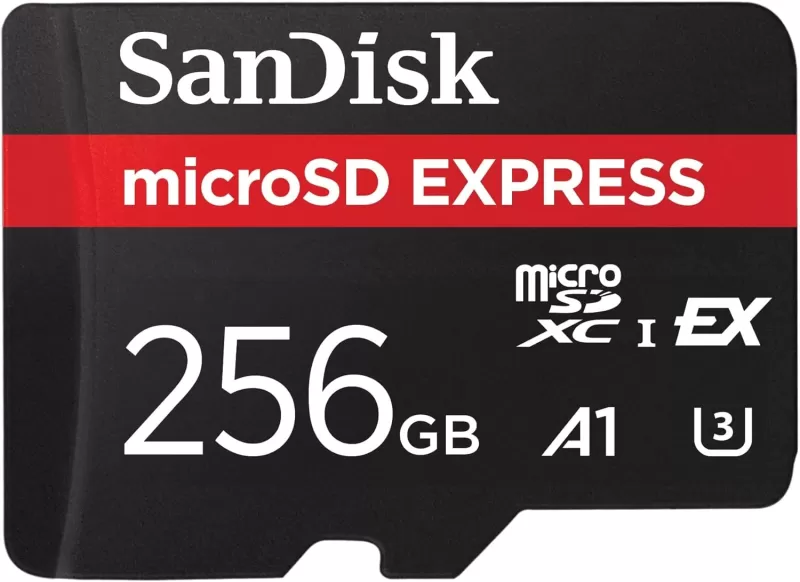
Consequently, you cannot reuse your old Switch memory cards when you purchase the new console this summer. To increase storage capacity, you will need to buy microSD Express cards, like those currently offered by SanDisk on Amazon. Options include a 128GB model for $44.99 and a 256GB version for $59.99.
Compatible with Switch 2
SanDisk 256GB microSD Express Card
List Price: $64.99 (Save 8%)
Current Price: $59.99 at Amazon
SanDisk 256GB microSD Express Card - $59.99 (was $64.99)
SanDisk 128GB microSD Express Card - $44.99 (was $49.99)
The Nintendo Switch 2 includes a substantial 256GB of internal storage, a major improvement over the original Switch's 32GB. For many users, this built-in capacity may be sufficient initially. However, it's important to consider that game file sizes for the Switch 2 are expected to be significantly larger.
To illustrate, one of the largest games for the original Switch, The Legend of Zelda: Tears of the Kingdom, was 16GB. Enhanced versions for the Switch 2, along with new titles like the anticipated Mario Kart World, will likely demand much more space.
While exact file sizes for Switch 2 games have not been officially released, it is reasonable to expect they will consume a considerable amount of storage. Unlike its predecessor, which supported standard microSD, microSDHC, and microSDXC cards, the Switch 2 will only be compatible with the faster microSD Express format.
Why is the Switch 2 Using MicroSD Express?
Nintendo's shift to microSD Express for the Switch 2 represents a significant upgrade in storage technology. The primary reason for this change is speed. Traditional microSD cards, which use the UHS-I interface, have a maximum transfer speed of around 104 MB/s. In contrast, microSD Express cards utilize PCIe and NVMe technology to achieve theoretical speeds of up to 985 MB/s—nearly ten times faster.
Due to this substantial performance benefit, the Switch 2 will not support older microSD card types, only the Express variant. This means your existing Switch memory card will not work unless it is already a compatible Express model. This requirement ensures the console can smoothly load and run larger, more graphically intensive games without performance bottlenecks.
However, this advancement comes with a notable drawback: higher cost. For comparison, a standard 128GB microSD card for the original Switch typically costs between $10 and $15. An equivalent capacity in the microSD Express format is priced around $45. Furthermore, microSD Express cards are not as widely available as standard ones, with only a few manufacturers like SanDisk and Samsung currently producing them. While Nintendo's move future-proofs the console for demanding games, it does increase the expense of expanding storage for the user.
If you are planning to buy a Switch 2, be prepared to allocate extra budget for these faster, more expensive memory cards. For a full recap of everything announced during the Nintendo Switch 2 Direct presentation, you can click here.