
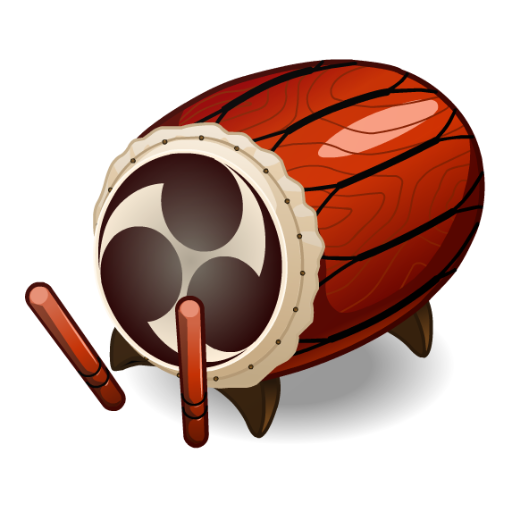
Taiko Virtual
Taiko, known as 太鼓 in Japanese, encompasses a wide variety of traditional Japanese percussion instruments. While the word "taiko" generally means "drum" in Japanese, internationally it often refers specifically to wadaiko (和太鼓, literally "Japanese drums") and the ensemble style of drumming called kumi-daiko (組太鼓, meaning "set of drums"). The craftsmanship involved in making taiko differs among artisans, and the creation of both the drum body and skin can span several years depending on the techniques used.
According to Japanese mythology, taiko have legendary origins, though historical evidence indicates they were introduced to Japan from Korean and Chinese cultures around the 6th century CE. Certain taiko share similarities with instruments that trace back to India. Archaeological findings from the Kofun period further confirm the presence of taiko in Japan during the 6th century. Throughout history, taiko have served various roles—from communication and military uses to theater, religious rituals, festivals, and concert performances. More recently, taiko have become symbolic in social movements for minority groups in and outside Japan.
Kumi-daiko, the ensemble style featuring multiple drummers playing different drums, was pioneered in 1951 by Daihachi Oguchi and later popularized by groups like Kodo. Other styles, such as hachijō-daiko, also developed within specific Japanese communities. Today, kumi-daiko groups are active globally, including in Japan, the United States, Australia, Canada, Europe, Taiwan, and Brazil. A taiko performance incorporates various technical elements: rhythmic patterns, form, stick grips, attire, and specific instrumentation. Ensembles commonly use barrel-shaped nagadō-daiko along with smaller shime-daiko. Many groups also enhance their performances with vocals, string, and woodwind instruments.