
Final Fantasy might be revisiting its turn-based origins following the remarkable success of Expedition 33. Discover Square Enix's evolving stance on combat systems and how the company struggled after the departure of Final Fantasy's original creator.
Final Fantasy Reconnecting With Its Legacy
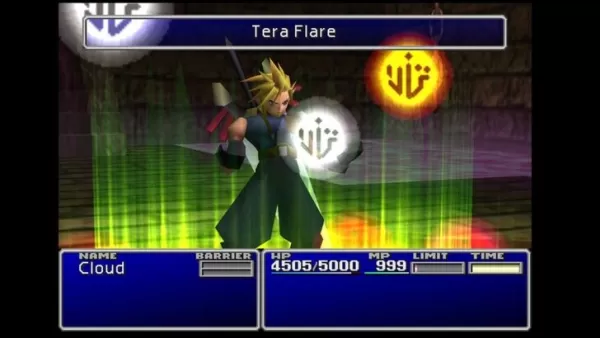
Square Enix Reaffirms Commitment to Turn-Based Systems

Final Fantasy may undergo a strategic shift as Square Enix reaffirms turn-based combat as fundamental to the company's heritage. During a June 25 shareholders meeting, discussions focused on development strategies for upcoming Dragon Quest and Final Fantasy titles.
As reported by Game's Talk.net, shareholder Yuzu proposed annual releases of flagship IPs while advocating a return to conventional turn-based mechanics. He highlighted Expedition 33's remarkable performance - selling 3.3 million units in 33 days - as proof of enduring market demand for the genre.

Square Enix officials acknowledged these market indicators while monitoring industry trends that could shape future projects. The company explicitly recognized turn-based RPGs as foundational to their identity, describing them as "the origin of Square Enix."
This development follows persistent fan demand for a return to classic gameplay mechanics. Recent franchise entries like Final Fantasy 7 Remake and Final Fantasy 16's action-oriented approach have polarized the community.

The transition towards real-time combat originally aimed to attract younger audiences. FF16 Producer Naoki Yoshida explained in a 2022 Famitsu interview that modern consoles enable fluid real-time expression, making menu-driven combat seem antiquated to newer generations.
"This doesn't represent a value judgment, but rather reflects widening generational preferences," Yoshida clarified. Interestingly, he suggested strong potential for a command-based system return in future installments.
Square Enix's renewed appreciation for the genre suggests this transition may materialize. Despite FF16's success, the company plans to continue delivering turn-based experiences, leaving fans curious about potential implementations.
Organizational Challenges Following Key Departure
"He left and the organization suddenly collapsed. I thought to myself – Oh no, I should get away from here."
In related developments, composer Nobuo Uematsu revealed significant organizational turbulence after original series creator Hironobu Sakaguchi's 2003 departure. Sakaguchi left following financial difficulties, subsequently founding Mistwalker in 2004.

During a recent episode of Uematsu's NOBIYO To Isshoni podcast, both industry veterans reflected on their Square Enix tenure. Uematsu described Sakaguchi as the unifying force who maintained cohesion in the previously informal company structure.
Despite past challenges, Uematsu commends Square Enix's resilience and maintains collaborative ties, contributing to multiple Final Fantasy titles as a freelancer. Since 2004, both creatives have worked on various projects and are reportedly planning a spiritual successor to the beloved Final Fantasy 6.